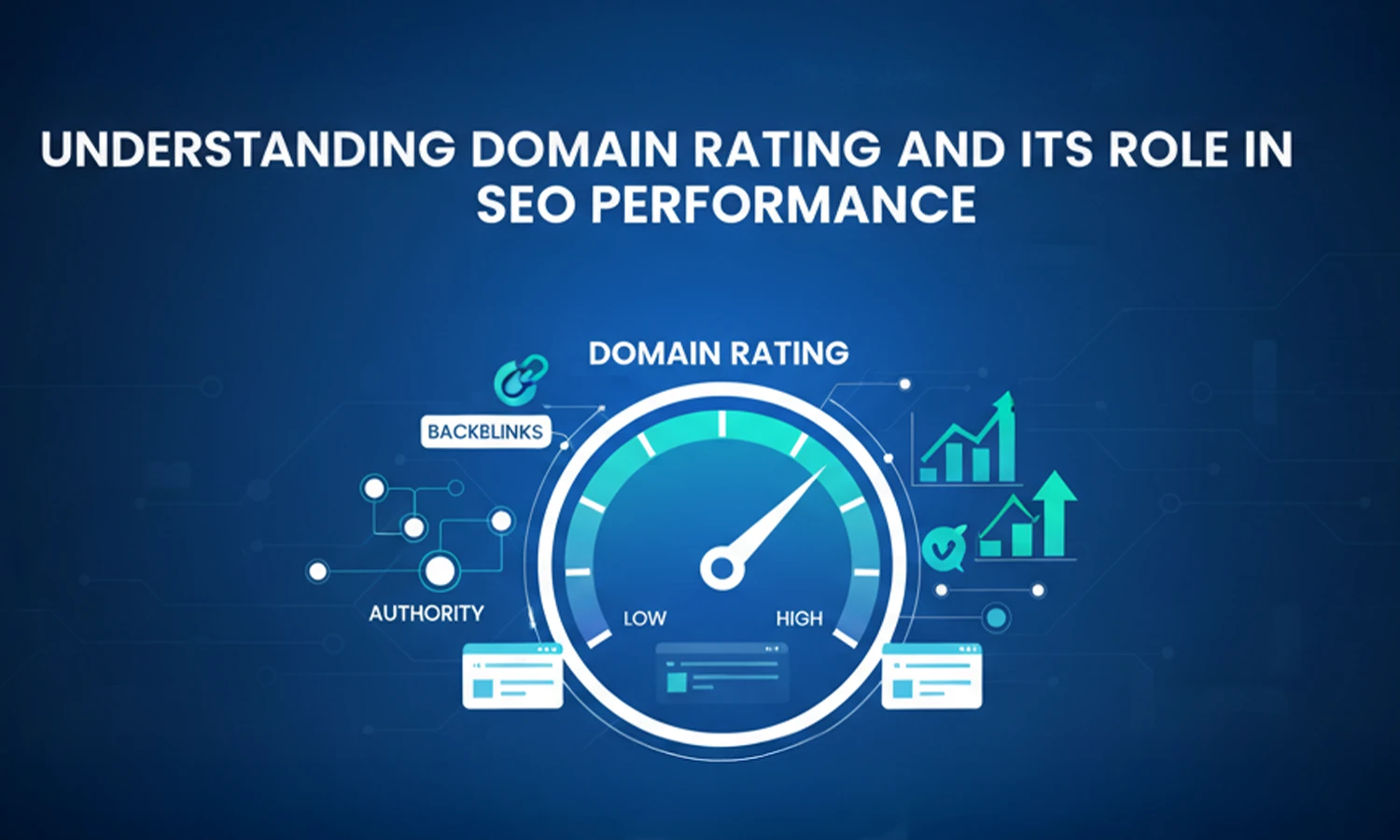
In the digital landscape of 2026, website authority is the currency of search success. Among the many metrics used to track this, Domain Rating (DR) stands out as a vital benchmark. At SEODADA, we use this metric to provide you with a clear "report card" of your website's backlink strength and ranking potential.
What Does Domain Rating Mean in SEO?
Domain Rating is a proprietary SEO metric that measures the relative strength of a website’s backlink profile on a scale of 0 to 100. Think of it as a measure of your site's "digital reputation."
While not a direct ranking factor used by search engines, it serves several critical roles in your strategy:
- Ranking Potential: Higher scores correlate with better visibility for competitive keywords.
- Link Building Filter: Use it to prioritize high-value partners.
- Competitor Analysis: Identify "authority gaps" between you and your rivals.
- Progress Tracking: Watch your score grow as your marketing efforts succeed.
How Is Domain Rating Measured?
The SEODADA calculation engine analyzes your site's link popularity based on several key factors. Because the scale is logarithmic, moving from a score of 10 to 20 is much easier than moving from 70 to 80.
- Unique Referring Domains: We count how many different websites link to you. One hundred links from one site are less powerful than one link from 100 different sites.
- Authority of Linking Sites: Links from established, high-authority domains pass significantly more "link equity" to your site.
- Outbound Link Dilution: If a site links to thousands of others, the authority it passes to each one is smaller.
- Follow vs. No-Follow: Our system focuses on "Follow" links, as these are the ones that pass ranking power.
Key Differences: Domain Rating vs. Domain Authority
While often used interchangeably, these two scores focus on different aspects of your site's health.
| Feature | Domain Rating (DR) | Domain Authority (DA) |
| Primary Focus | Backlink profile strength. | Overall ranking prediction. |
| Main Factors | Unique referring domains. | 40+ factors, including spam score. |
| Update Frequency | Highly frequent (Daily). | Periodic (Monthly). |
Does Domain Rating Help Increase Organic Search Traffic?
In 2026, there is a massive correlation between a high DR and organic traffic. However, it is an indirect relationship.
- The Edge: Sites with a DR of 50–75 often dominate the top 3 search results.
- Faster Indexing: Authoritative sites are crawled more frequently by search bots.
- Trust Building: In an era of AI-generated content, a strong link profile proves to search engines that your site is a trusted human resource.
Crucial Tip: A high DR alone won't save poor content. You must match Search Intent to turn that authority into actual clicks.
Do Subdomains Share the Same Domain Rating?
A common technical question is whether blog.yoursite.com has the same power as yoursite.com.
- Shared Authority: If the subdomain is a direct extension of your business (like a help center), it typically reflects the main domain's rating.
- Independent Entities: For platforms where users create their own sites (like blogging platforms), each subdomain is treated as a separate website with its own score.
- The Subdirectory Advantage: Generally, using a subdirectory (yoursite.com/blog) is better for consolidating all your "link juice" into one powerful score.
Common Domain Rating Myths to Avoid
Don't let these misconceptions distract you from real growth:
- Myth: "DR is a direct Google ranking factor."
Truth: It is a third-party benchmark to help you understand your site's strength.
- Myth: "Higher DR always means more traffic."
Truth: A niche site with DR 30 can outrank a DR 60 site if its content is more relevant.
- Myth: "A slight drop in DR means you are failing."
Truth: DR is relative. If a massive site like Wikipedia grows, the entire scale shifts slightly.
Using SEODADA Tools to Improve Your Score
Don't just watch your number, take action with these specific SEODADA features:
- Keyword Analysis Tool: Identify high-value "Secondary Terms" your competitors are using to bridge the content gap.
- Image Audit Tool: In mobile-first markets like India, heavy images kill rankings. Ensure your linkable assets are under 100KB.
- URL Search (Orphan Pages): Find pages with zero internal links. Use your site's existing authority to "boost" these pages through strategic internal linking.
H1-H3 Heading Check: Structure your content to answer FAQs directly, increasing your chance of appearing in "AI Overviews."