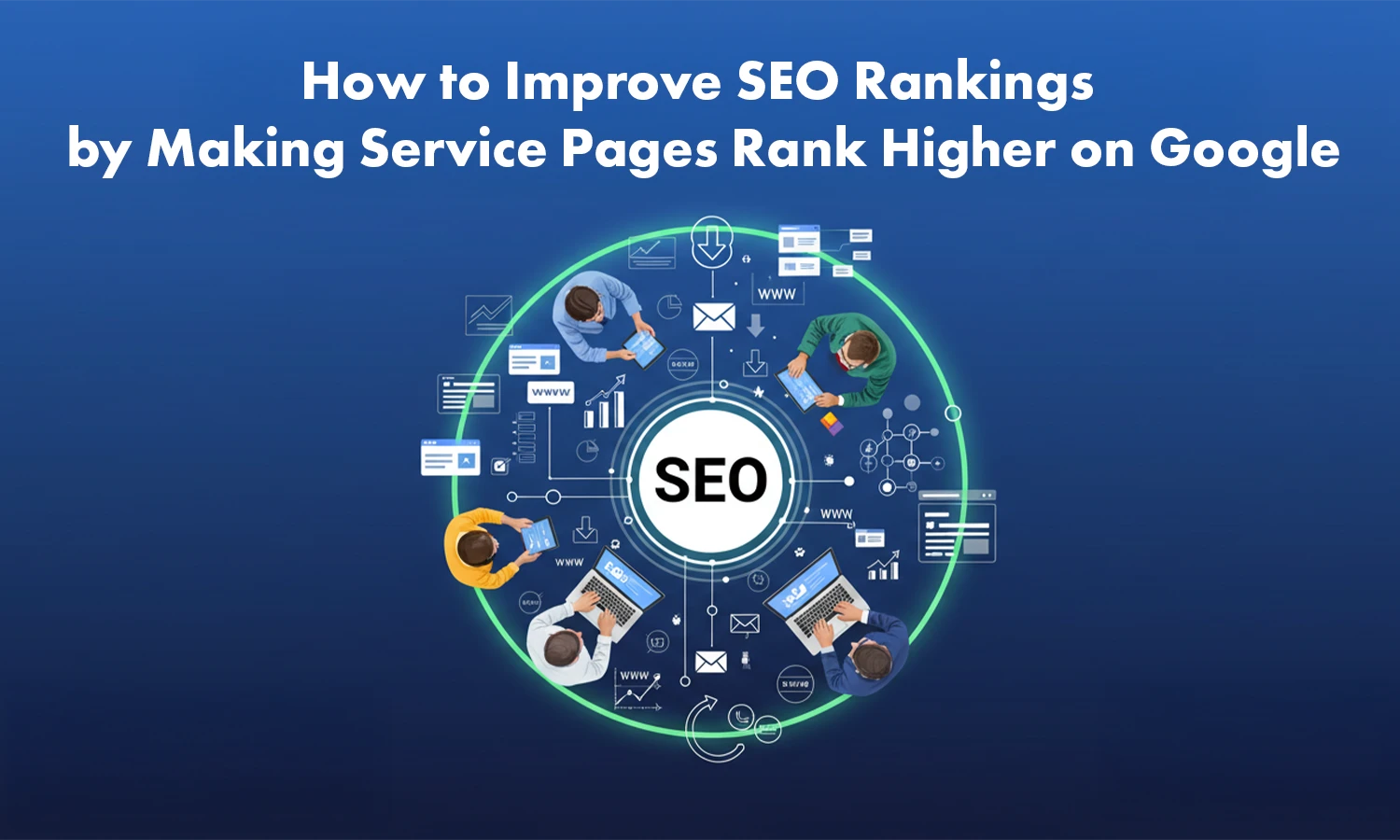
In 2026, brands trying to Improve SEO Rankings often focus on blogs and backlinks while overlooking the pages that matter most for conversions: service pages. Google’s modern systems evaluate service pages based on intent match, topical authority, and E-E-A-T, not just keyword presence.
Service pages now directly influence seo rankings and overall website ranking because they sit at the transactional stage of search. If these pages are unclear, overloaded, or unsupported, even strong content elsewhere will struggle to lift your google ranking.
Simple Page Improvements That Help Service Pages Rank Better
To Improve SEO Rankings, service pages must be easy to understand in seconds. Google’s AI-driven systems prioritise pages that answer the user’s core question quickly.
Key improvements that consistently work:
- One clear H1 that states the service
- Logical H2 and H3 headings for benefits and sub-services
- A concise summary within the first 120–150 words
Pages using this “answer-first” structure perform better during any seo ranking check because they reduce bounce rates and improve engagement signals tied to google search ranking.
Start With One Clear Topic for Each Service Page
One of the biggest ranking mistakes in 2026 is trying to rank a single page for multiple services. Google evaluates topical authority at the page level.
A page offering “Web Design, SEO, and Social Media” sends mixed signals and weakens pagerank flow. In contrast, a dedicated page for “Local SEO Services for Small Businesses” aligns perfectly with commercial intent.
This focus makes it easier for Google to categorise expertise and steadily Improve SEO Rankings for competitive service queries.
Explain Your Service Clearly at the Beginning
User attention spans are shorter than ever. If visitors cannot understand what you offer within 3–5 seconds, they return to search results.
High-performing service pages use:
- A direct headline stating the service
- A short sub-line explaining the outcome
- A clear call-to-action
This clarity strengthens seo optimisation by improving dwell time and reducing pogo-sticking, both of which influence seo rankings and long-term website ranking stability.
Use Headings Based on How Users Search
In 2026, headings are no longer just design elements. Google uses Natural Language Processing to match headings with real search queries.
Instead of generic headings like “Our Process,” pages that rank higher use intent-led headings such as:
- “How Much Does [Service] Cost in 2026?”
- “Who Is This Service Best For?”
These structures help pages appear in featured snippets and People Also Ask boxes, improving google ranking visibility and reinforcing google search ranking authority.
Add Useful Information Without Overloading the Page
More content does not mean better rankings. What matters is information density.
Effective service pages:
- Use bullet points for benefits
- Keep paragraphs short for mobile readability
- Place deep technical details inside accordions or linked blogs
This approach supports seo optimisation while keeping the page conversion-focused. Supporting articles also help pagerank distribution when linked correctly.
Build Trust on Your Service Page
Trust is no longer optional. Google actively evaluates whether a service page shows real experience.
Strong trust signals include:
- Real photos of teams or work
- Short case studies showing outcomes
- Specific testimonials with context
These elements consistently improve seo rankings because they satisfy E-E-A-T requirements and strengthen confidence during a seo ranking check.
Support Service Pages With Helpful Content
Service pages rarely rank alone. Google looks for topical authority, not isolated sales pages.
The pillar–cluster model works best:
- One core service page (pillar)
- 5–10 supporting blogs answering related questions (clusters)
Each cluster page links back to the service page using descriptive anchor text. This internal linking system stabilises website ranking and improves google ranking performance over time.
Check and Update Service Pages Regularly
SEO is not static. Pages that are not updated slowly lose relevance.
Every six months:
- Refresh examples and data
- Update visuals and testimonials
- Fix broken links and slow images
Regular updates help Improve SEO Rankings and make it easier to check website ranking improvements without sudden drops.
Making Service Pages Strong for Long-Term SEO
Long-term success comes from satisfying intent so completely that users do not return to Google. Pages that do this send strong engagement signals.
Interactive elements, comparison tables, and short explainer videos increase time-on-page and strengthen seo optimisation outcomes. Clean technical foundations also matter. Regular audits of URLs, images, and internal links prevent silent ranking losses.
Tools like SEODADA.com help identify structural gaps, content weaknesses, and technical issues that stop service pages from maintaining stable seo rankings.