
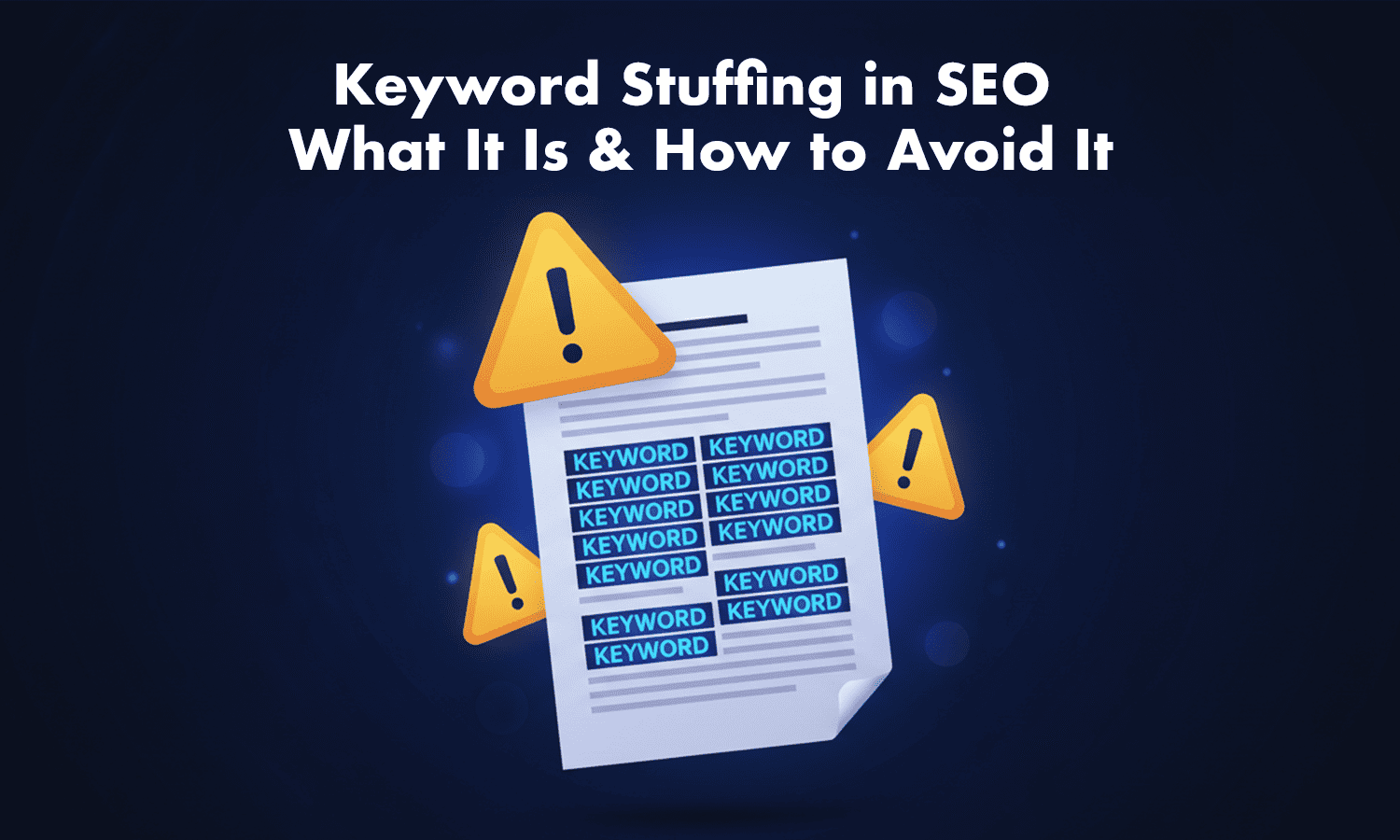
Keyword Stuffing in SEO: What It Is & How to Avoid It
When people start learning SEO, they often hear that they must “use keywords” in their content. Somewhere along the way, this sometimes turns into overusing the same phrase again and again. That is where Keyword Stuffing comes in.
Keyword stuffing is one of the oldest bad practices in SEO. It used to be common years ago, and even today, you still see pages that repeat the same term in every second line. In this guide, let us keep it simple and see what Keyword Stuffing really is, how it hurts you, how to spot it, and how to avoid it without stressing over every sentence.
What Is Keyword Stuffing?
In simple words, Keyword Stuffing is when a page uses the same keyword or set of keywords too many times in an unnatural way. Instead of writing for the reader, the content is written mainly for the search engine.
If you are trying to understand the meaning of keyword stuffing, think of content where the same phrase is forced into titles, headings, paragraphs, image alt text and even footers, even when it does not fit the sentence.
This is what people usually mean when they talk about keyword stuffing in SEO. It is not just “using keywords”; it is using them in a way that makes the content sound repetitive, fake, or uncomfortable to read.
How Keyword Stuffing Affects SEO
The problem with Keyword Stuffing is not only that it looks bad. It also sends the wrong signals to search engines.
Here is how it affects SEO in real terms:
- It makes your content feel low-quality
- Users may leave quickly because the page looks spammy
- Search engines can treat the page as manipulative
- You risk losing trust instead of building it
Most cases of SEO keyword stuffing happen when people are too focused on “density” and forget about clarity and intent. Search engines today are smart enough to understand the topic of a page without you repeating the same term in every line.
So when you think of keyword stuffing SEO tactics, it is better to see them as shortcuts that no longer work and can actually hold you back.
Why Websites Use Keyword Stuffing
If Keyword Stuffing is so risky, why do people still do it?
Usually it happens because:
- Someone read old advice that said “use your keyword as many times as possible”
- They misunderstand how search engines work today
- They are nervous about not ranking and try to “force” relevance
In many cases, Keyword Stuffing starts with good intentions. People are trying to follow SEO advice, but they apply it in an extreme way. The result is content that sounds robotic and does not help the user.
How to Identify Keyword Stuffing
To avoid Keyword Stuffing, you first need to know how to spot it.
Here are a few simple checks you can do:
- Read the content out loud: if the same phrase keeps repeating and feels uncomfortable, that is a warning sign
- Look at headings and subheadings: if every heading is just the exact keyword repeated, it may be over-optimised
- Check meta tags and alt text: if everything is stuffed with the same term, it looks unnatural
You can also do a basic keyword stuffing check using SEO tools that highlight repeated phrases and show you if one term is appearing too many times across the page.
A simple keyword stuffing example would be a paragraph like this:
“Our digital marketing agency offers digital marketing services for anyone looking for digital marketing. If you need digital marketing, contact our digital marketing agency today.”
No real user wants to read that. When you review your pages, take a moment to check keyword stuffing issues like this, especially on older content that was written with old SEO advice in mind.
How to Avoid Keyword Stuffing
Now let us talk about the part that really matters: how to avoid keyword stuffing in a practical way.
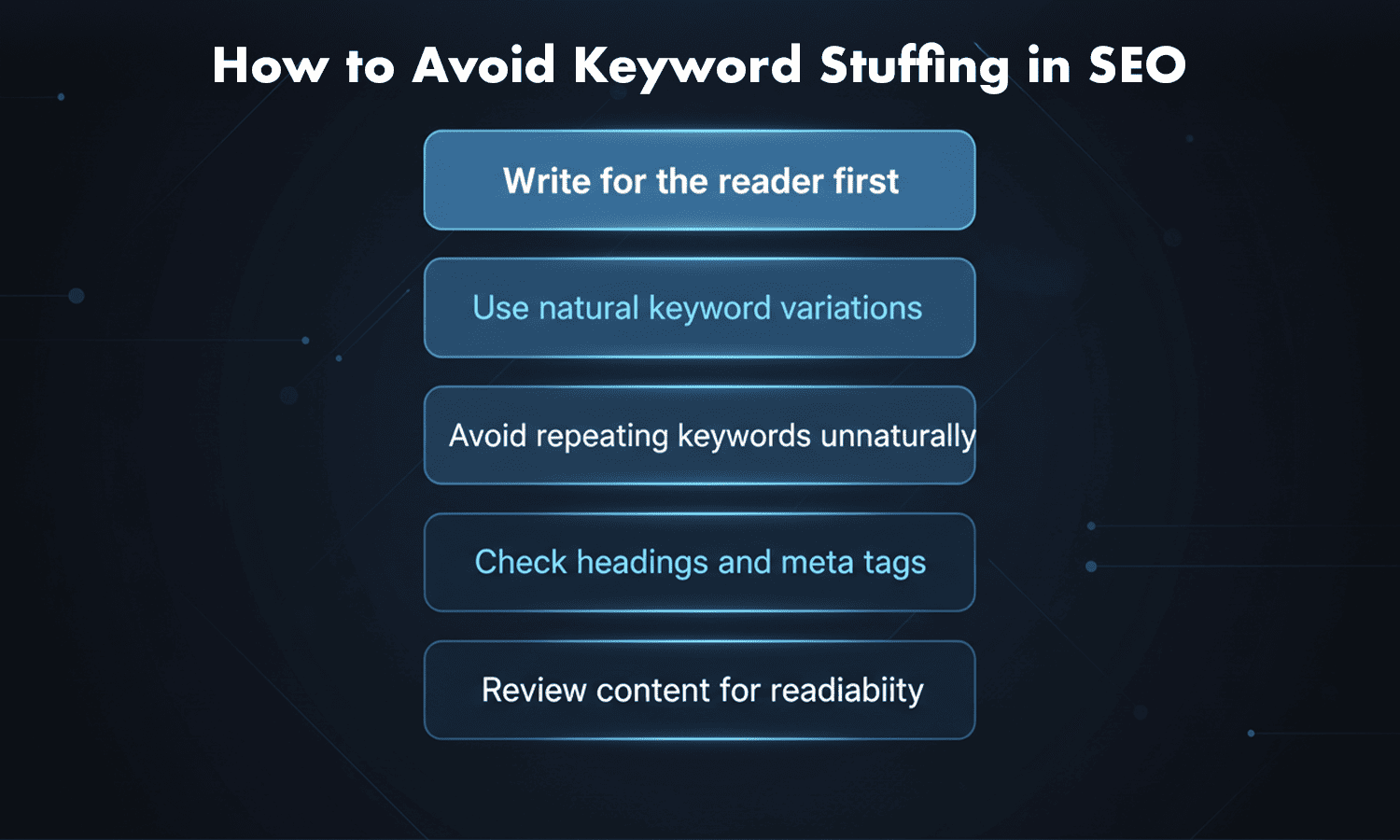
Here are a few simple habits that help:
- Write for the reader first
Start by answering the user’s question clearly. Once the draft is done, you can gently place the keyword in key areas like the title, one or two headings, the introduction and the conclusion.
- Use natural variations
You do not need the exact same phrase every time. Use natural variations and related terms. This still tells search engines what your page is about without feeling repetitive.
- Keep an eye on density, but don’t obsess
You can quickly check how many times you used your main term, but do not chase a “perfect” number. Focus on readability first and let the density be a final check, not the main goal.
- Read your content like a real user
After writing, read the page slowly. If your own content annoys you, it is a sign that Keyword Stuffing might be happening.
Clean Up all the Keyword Stuffing with Seodada
Keyword Stuffing is less about one exact number and more about how your content feels. If the page sounds natural, helpful and easy to read, you are usually safe. If it sounds like it was written only for a search engine, it is time to fix it.
The good news is that you don’t have to guess.
With Seodada, you can:
- Scan your pages and see where keywords are overused
- Review on-page elements like headings and meta tags in one place
- Spot patterns where old content still carries Keyword Stuffing habits
- Make changes and then track how performance improves over time
Instead of worrying about every small keyword, you get a clear view of where the real problems are. That way, you can remove Keyword Stuffing where it exists and focus on writing content that feels natural for people and still makes sense for search engines.