
Introduction
If you want steady SEO growth, you cannot guess your keywords anymore. You need clear data on what people search for, what your pages rank for, and where competitors are ahead of you. That is where Keyword Analysis Tools come in.
In this blog, we will talk about what an SEO keyword analysis tool actually does, why keyword analysis is important, how it helps with targeted traffic and conversions, and which tools you should seriously look at in 2026.
What is an SEO Keyword Analysis Tool?
Let us start with the basics.
An SEO keyword analysis tool helps you understand how people search around your topic, which pages rank for those terms, and where there are gaps you can target. Good Keyword Analysis Tools show you search volume, difficulty, related phrases, and sometimes even live SERP data.
You can also use them to do a deeper website keyword analysis so you know which pages are doing well and which ones are not pulling their weight.
Some tools give you a quick keyword analyzer view where you type in a single keyword and see related terms, while others can scan your entire site and map multiple topics at once.
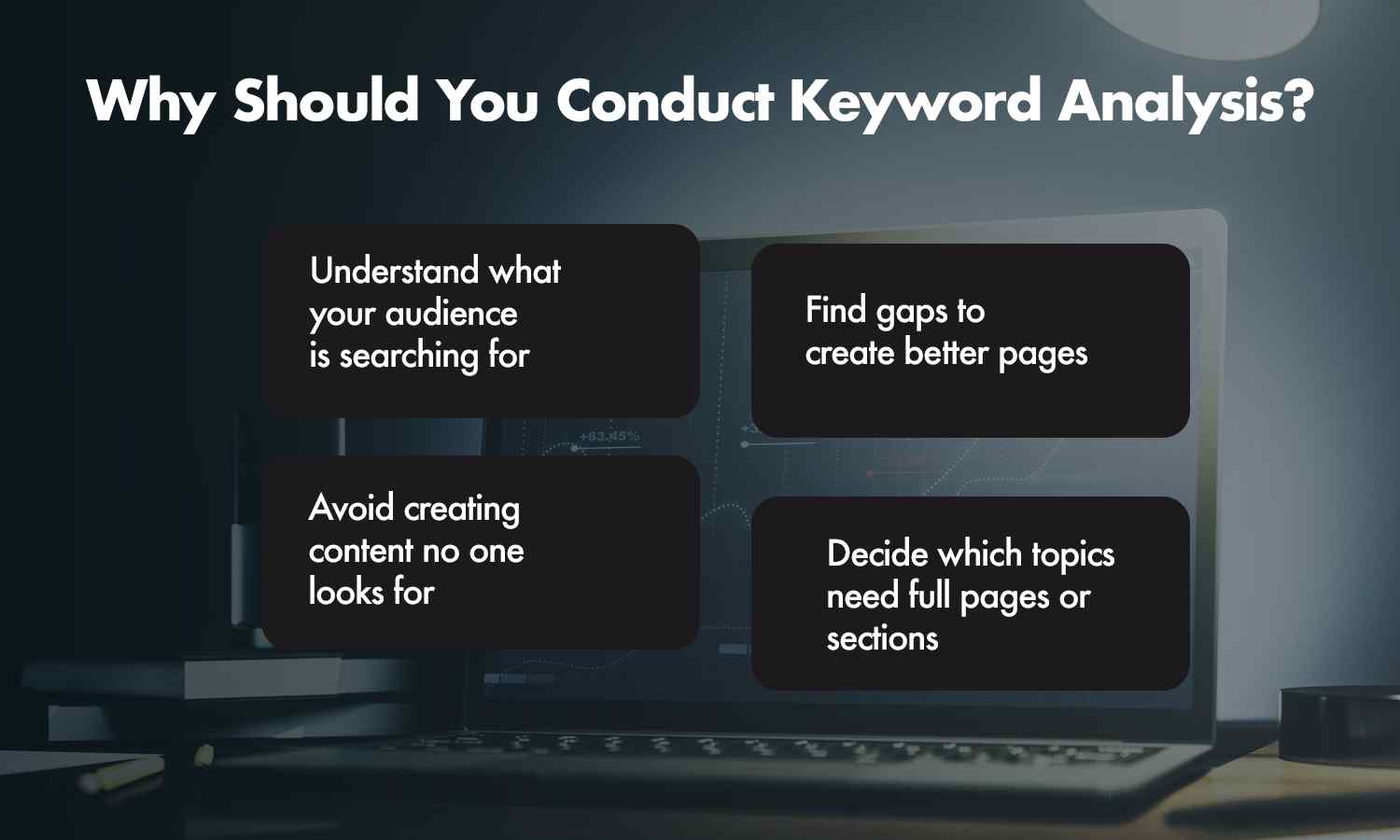
Why Should You Conduct Keyword Analysis?
Keyword analysis is not just another SEO task you tick off once a year. It is something you should keep revisiting.
When you work with Keyword Analysis Tools regularly, you can:
- Understand what your ideal audience is actually searching for
- Avoid writing content that no one is looking for
- Spot gaps where you can write better pages than what exists today
- Decide which topics need a full page and which ones can be part of a section
This is where proper seo keyword analysis helps you make decisions based on data, not assumptions. Over time, that is what separates random content from a proper content strategy.
You can also check website ranking for keywords that really matter to your business and see if your improvements are moving things in the right direction.
How Keyword Analysis Drives Targeted Traffic to Your Pages
Traffic by itself does not help if it is the wrong traffic. Keyword analysis makes sure you are going after searches that match your offer.
For example, keyword search analysis can show you whether people are in research mode, comparison mode, or ready to buy. Once you understand this, you can match your page type and content style to that intent.
You can also Check website keywords that you already rank for and then build better internal linking and content depth around those topics. This is how you grow traffic in a focused way instead of chasing every possible term.
When you add in smart competitor research tools to your workflow, you get a clearer view of where others are getting their traffic from and how you can respond.

How Keyword Analysis Can Improve User Engagement and Conversions
Keyword analysis is not only about rankings. It also affects how users behave after they land on your site.
When you use Keyword Analysis Tools to match content with real search intent, visitors are more likely to:
- Stay on the page longer
- Move to other related pages
- Take actions that matter, like sign ups or enquiries
If a user searches for something specific and your page answers that need clearly, engagement naturally improves. Over time, this also helps conversions, because people feel like they reached the right place.
You can use competitor analysis tools to see how others are positioning their pages and then stand out with clearer, more helpful content.
As you refine things, you will slowly find keywords used by competitors that you missed earlier and build better offers or pages around them.
Best SEO Keyword Analysis Tools You Should Use in 2026
Now let us talk about the types of Keyword Analysis Tools you should be using in 2026. You do not need everything on the market, but you do need the right mix.
1. Tools for finding new keyword ideas
These tools help you understand what people are searching for around your topic, including long tail and question-based search terms. A strong keyword analyzer tool will help you group those terms into themes so you can plan pages and topic clusters.
You can then run a quick keyword competitor analysis on those themes and see where you have a realistic chance to rank.
2. Tools for monitoring your own site
You also need tools that let you check website keywords at scale. These tools scan your pages, show you which terms you already rank for, and highlight where your content needs more depth.
You can go one step further and check website ranking for keywords that are close to page one so you can focus on content refreshes and internal linking to give them a small push.
3. Tools for understanding competitors
Finally, you should use Keyword Analysis Tools that help you check competitor keywords in a clean, simple report. The idea is not to copy everything they do, but to understand:
- Which pages bring them traffic
- Which terms do they focus on
- Where they are weak or missing topics
You can then position your own content better and build angles they do not cover yet.
Some tools also act as ongoing keyword analyzer dashboards that track both you and your competitors across time.
When you put all of this together, you get a small set of the best keyword analysis tools for your business instead of a long list you never actually use.
Bring It All Together With Seodada
Everything we spoke about in this guide comes down to one thing: you need clear data, not guesswork. Keyword Analysis Tools should help you understand what people search for, what your site ranks for, and where your competitors are ahead, without making things complicated.
That is exactly why we built Seodada.
With Seodada, you can:
- Check keywords across your entire website in a structured way
- See which pages are doing well and which ones need more work
- Run proper SEO keyword analysis without jumping between multiple tools
- Compare your performance against competitors and find real opportunities
Instead of juggling five different platforms, you get a clean, focused view of your keywords, pages, and gaps in one place. So if you are serious about turning keyword analysis into actual results, Seodada gives you the foundation to do it consistently.